
Authentic 8-Bit Aesthetic
Replicates constraints of vintage hardware with blocky pixel rendering and grid alignment, ensuring an authentic retro look.
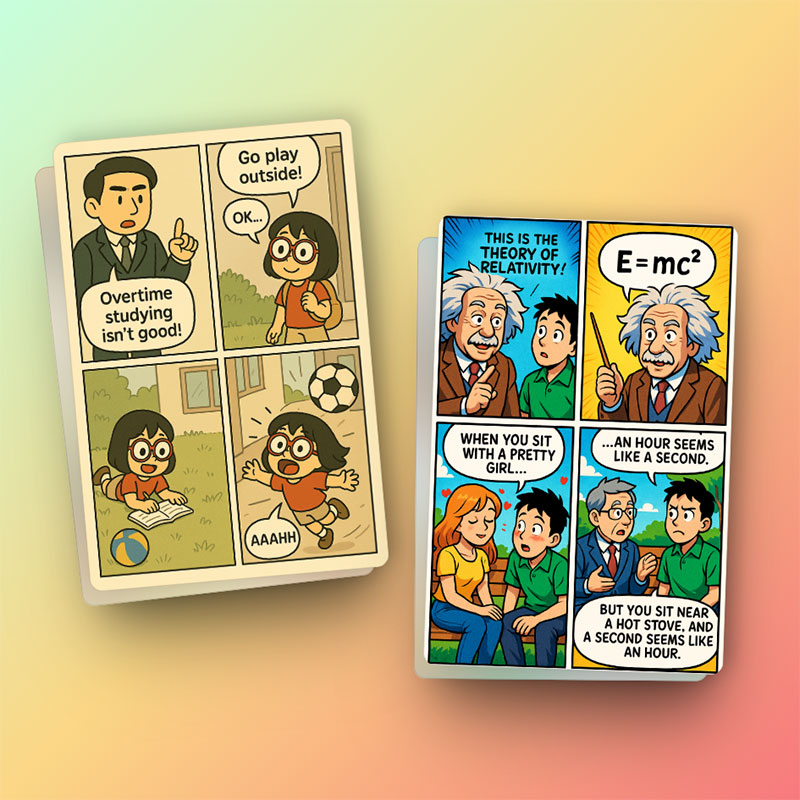
Create retro 8-bit pixel art comics with AI. Features nostalgic gaming aesthetics, blocky pixels, and classic video game colors for unique visual storytelling.
Quick facts
Primary keyword
Compatible formats
Best for
Pixel art style AI comics transport your readers back to the golden age of 8-bit and 16-bit gaming. This distinctive digital art style is built from visible, blocky pixels, creating a charming, nostalgic aesthetic that instantly evokes memories of classic consoles and arcade cabinets. Our AI pixel art generator perfectly captures the limitations and creativity of retro graphics, including limited color palettes, dithering effects, and the precise, grid-based structure of pixel sprites. Perfect for stories about gaming, technology, or retro-futurism, pixel art offers a unique visual language that stands out in modern feeds. Whether you're making a comic about an RPG adventure, a cyberpunk glitch narrative, or just love the aesthetic of old-school tech, this style delivers authentic retro vibes effortlessly.
Replicates constraints of vintage hardware with blocky pixel rendering and grid alignment, ensuring an authentic retro look.
Utilizes limited color schemes typical of NES, SNES, or Game Boy eras, creating harmonious and nostalgic color combinations.
Characters are rendered as distinct 'sprites', mimicking the look of video game protagonists with clear silhouettes and readable poses.
Includes classic pixel art techniques like dithering (checkerboard patterns) to create shading and texture with limited colors.
Instantly connects with gamers and millennials who grew up with pixel graphics, creating a strong emotional bond.
Pixel art is immediately recognizable and separates your content from the sea of smooth digital illustrations on social media.
The abstraction of pixel art allows the reader's imagination to fill in the gaps, often making scenes feel more immersive despite lower resolution.
Because it is natively digital, pixel art looks crisp and perfect on screens, free from compression artifacts common in painterly styles.
The obvious choice for comics about video games, esports, streamers, or 'isekai' stories set inside a game world.
Complements stories set in the 80s or 90s, or futuristic stories with a retro-tech aesthetic.
Pixel art is the lingua franca of the crypto art world, making this style ideal for projects in the web3 space.
Create promotional comics or devlogs for indie games that use pixel art graphics.
Keywords like '8-bit', '16-bit', or '32-bit' control the level of detail. 8-bit is blockier; 16-bit allows for more color and detail.
Ask for 'Gameboy green', 'neon arcade', or 'CGA palette' to restrict colors to specific nostalgic hardware looks.
Pixel art works well in 'side scroller view' (perfect for panels) or 'isometric view' (great for maps or rooms).
Subtle details get lost in pixels. Focus on bold shapes, high contrast, and clear icons in your prompt descriptions.
Referring to characters as 'pixel sprites' helps the AI understand the specific character rendering style you want.
Pixel Art is the most digital and structured of all styles. It is the direct opposite of the organic, fluid lines of Watercolor or Sketch. Unlike Vector or Cartoon styles which use smooth curves, Pixel Art uses hard edges and squares. It shares a 'simplification' philosophy with Minimalist and Chibi styles but achieves it through resolution constraints rather than geometric abstraction. It is unique in its direct reference to a specific era of technology.
Authentic pixel art should look crisp, with sharp edges on the pixels. Our generator ensures the 'pixels' remain sharp blocks, not blurry smudges.
Text inside the image will be illegible 'pixel gibberish'. It is best to add your comic dialogue using a pixel-font overlay in the editing stage.
It depends on the mood. 8-bit is more abstract and retro (think NES). 16-bit is more detailed and colorful (think SNES or Genesis). Choose based on your story's needs.
It's a bold choice! Mixing pixel characters into a realistic background (like the movie 'Pixels' or 'Wreck-It Ralph') can create a cool 'glitch in reality' effect.