
Hard, directional light
Give each scene one visible source, such as a desk lamp or a neon sign, to shape the shadows.
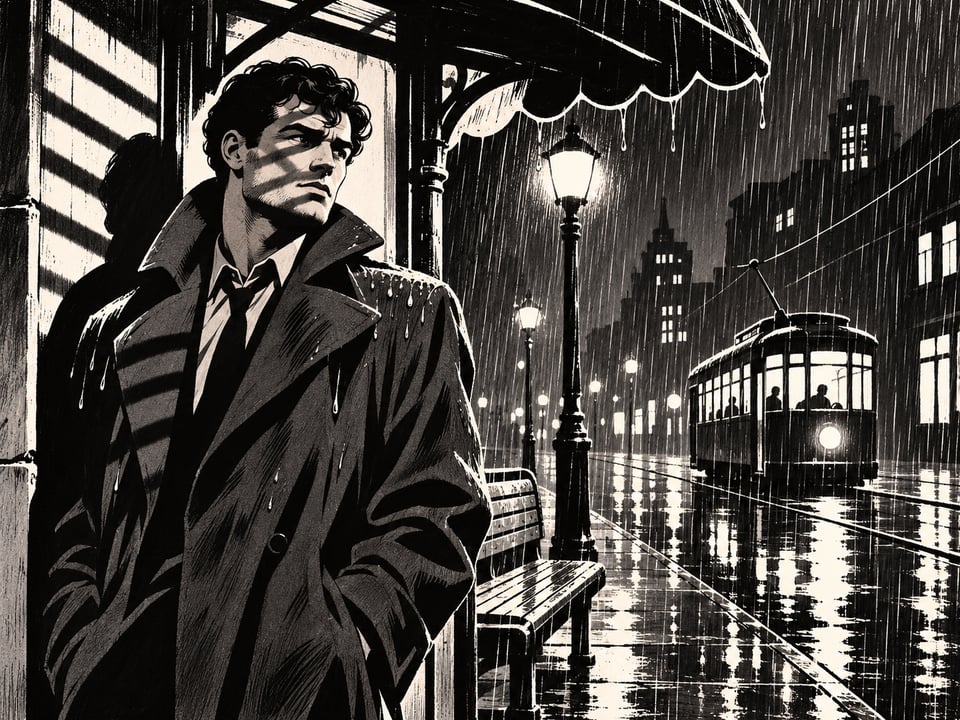
Create film noir comics with hard shadows, stark monochrome contrast, and cinematic framing for detective stories and visual suspense.
Quick facts
Primary keyword
Compatible formats
Best for
Film Noir uses hard light, large shadows, and carefully framed clues. A streetlamp can reveal a figure on an empty sidewalk, while the shadow from a window can divide an otherwise ordinary room.
Give each scene one visible source, such as a desk lamp or a neon sign, to shape the shadows.
Use a recognizable outline to establish a figure and a tight shot to reveal a small detail.
A restrained palette leaves room for a clue, expression, or gesture to carry the scene.
Follow a detective from a late-night phone call to a clue reflected in a window.
Use a quiet station, empty diner, or rain-slick sidewalk to build anticipation.
Place one lamp, window, or streetlight in the scene.
Pick the object or character the reader should notice first.
Use a wide establishing shot followed by a close-up when a detail changes the story.
Film Noir uses pools of light and shadow as part of the storytelling. Sketch emphasizes pencil marks and gesture, while Cyberpunk usually builds atmosphere with colored neon and technology.
High-contrast black and white is a good starting point. A restrained accent, such as the red of a matchbook, can draw attention to a clue.
Ask for a sliver of light across the eyes or cheek, and leave a visible outline between the character and the background.